Harness the Power of Anthocyanins -
The Purple Defense
Issue
#008
Welcome to the 8th issue of Discover The Power of Healing Foods! newsletter. You can read the
entire issue on line by clicking here.
We've been led to believe that the real benefit of fruits and vegetables is in their vitamin C and E
content, but that's not really accurate. Most of the antioxidant power in these and other whole foods
comes from carotenoids and flavonoids.
In our previous issues we discussed several
carotenoid antioxidants and where we can find them. Then we discussed flavonoids in general and quercetin
in particular. If you've missed those issues catch up
here.
In this issue we will discuss:
Although most people have heard about vitamin C and E and even know something about carotenoids, not many
have heard about anthocyanins, let alone being able to pronounce the word. I certainly find it difficult to
get my tongue round that one!
Anthocyanins and their precursors, proanthocyanidins belong to the flavonoids family. They are also known
with several other names such as anthocyanidins, PCOs (proanthocyanidins oligomers) as well as OPCs
(oligomeric proanthocyanidins), procyanidolic oligomers, anthocynosides, and quite a few more, but I won't
bore you with the full list. I wish they had just one name, it would make life so much easier ;).
You might have read about them under one name or another not knowing that they were talking about the
same or similar compounds.
They are the blue and purple pigments found in grapes, blueberries and blackberries, as well as cherries.
They can also be extracted from pine bark (Pycnogenol) and the seeds of wine grapes.
Can't think of many purple foods? Here's a few:

The list of benefits that have been attributed to anthocyanidins continues to grow:
- Reduce risk of macular degeneration
- Prevent free radical damage in all the cells of the body
- Prevent destruction of collagen
- Can reduce inflammation and pain in arthritic conditions
- Improve circulation
- Protect against heart disease and stroke
- Reduce swelling and pain in hemorrhoidal and varicose veins
- Can inhibit abnormal cell growth that leads to cancer
With all these benefits it's not surprising to know that extracts derived from plants have been made in an
effort to capture all these benefits. The primary use of PCO extracts is the treatment of venous and
capillary disorders, including venous insufficiency, varicose veins, capillary fragility and disorders of
the retina such as diabetic retinopathy and macular degeneration.
But it appears that most individuals can benefit from an increased intake of PCOs, not just those with
health problems. In one study of 100 people with no visual problems, the group receiving PCOs demonstrated
significant improvement in visual performance in dark and after-glare tests compared to the placebo group.
Hawthorn and yarrow plants, both exceptionally rich in procyanidins, have long been used to treat angina
and circulatory problems. And they work quite fast: Hawthorn is reported to alleviate the pains of angina
within a month of two of treatment by 'defurring' the arteries.
You can get the benefits of anthocyanins from eating whole berries but they're more concentrated in berry
juice. And the best berry juice turns out to be red wine!
For years, researchers wondered how the French could drink red wine at lunch and dinner, pack away enough
butter and lard to fill a Parisian pastry shop and smoke just as much or more than people in other
countries, yet have heart disease rates 2 1/2 times lower than ours.
The mystery was solved when flavonoids were discovered and studied. While the French may take delight in
puffed pastries and cigarettes, they also eat a lot of fruits and vegetables, which, along with the red
wine they enjoy, are packed with these important compounds.
I can testify to the fact that Italians too enjoy their red wine and one Italian study examining more
than 700 people with a history of heart attack over 8 years found that those with the highest intake of
anthocyanidins had the lowest rate of heart attacks.
How do flavonoids protect from heart attacks? Studies show that they lead to a decrease in
atherosclerosis, or hardening of the arteries, making them more flexible and able to deal with the
stresses of high-fat foods and exercise.
Grape juice also contains flavonoids and may offer some protection, but it doesn't seem to be as
effective as red wine. Among the fruit juices, however, purple grape juice from Concord grapes has the
highest content of flavonoids.
White wine, on the other hand, has a much lower flavonoid content than red wine and doesn't seem to have
the same beneficial effect.
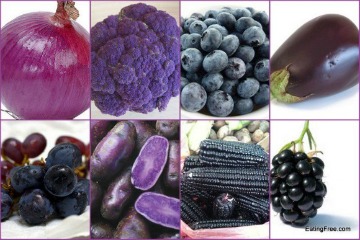
- beets
- bilberries
- blackberries
- blueberries
- broccoli (purple)
- cherries
- citrus fruits
- Concord grapes
- corn (purple)
- cranberries
- currants
- eggplant or aubergine
- figs
- green tea
- onions (red)
- persimmons
- plums
- pomegranates
- prunes
- radishes
- raisins
- raspberries
- red cabbage
- strawberries
Other types of flavonoids might be a bit tricky to get enough of in your diet, not because they're scarce
but because they often hide in out-of-the-way places, such as the white stuff beneath an orange rind, for
example, or inside an apple's peel.
The beauty of anthocyanidins is that they're easier to get to. They are plentiful in red wine and usually
you don't peel berries or cherries, although, unfortunately, we do discard the seeds of the grapes which
contain the highest amount of anthocyanidins.
Be careful, though; If you think that more is better, well that doesn't apply to wine. Studies show that
whereas 1 or 2 glasses of red wine a day have been found beneficial, a higher intake has been linked to
several health problems, so you don't want to over-drink.
Extracts of grape seeds and pine bark (Pycnogenol) are popular supplements that provide anthocyanidins and
PCOs. With regard to the free-radical scavenging activities of PCOs, studies demonstrate that grape seed
extract may be more potent and effective than the extract of pine bark.
Only grape seed extract contain particular compounds (proanthocyanidin B2-3'-0-gallate, if you must know)
that are not present in pine bark and are the most active free-radical scavenging PCOs. In addition, it's
far more economical to extract PCOs from grape seeds than from pine bark. As a result, the grape seed
extract provides greater value at a lower price!
But clinical trials have been carried out using Pycnogenol, a patented, proprietary formulation derived
from the bark of French maritime pine trees and have found it very effective in fighting heart disease and
stroke, minimizing symptoms of asthma and inflammation and protecting the brain from free radicals damage.
Studies carried out using grape seed extract have also found it very effective in preventing heart
disease, fighting cancer by preventing angiogenesis (the process of new blood vessels development that
allows tumors to grow), in circulatory problems and in the prevention of cataracts.
So it's not surprising that experts are divided on deciding which one is best. Probably, a supplement
containing either one would be good, or, even better, containing both.
As a preventive measure and as antioxidant support, a daily dose of 50 mg. of either grape seed or pine
bark extract should be used. When being used for therapeutic purposes, the daily dosage should be
increased to 150 to 300 mg. No side effects have been reported for PCO extracts.
An even better strategy is to include a variety of antioxidant supplements in your diet. They are team
players and work much better together than in isolation.
Apart from vitamin C and E, it should contain anthocyanidins (i.e. grapeseed or pine bark extracts as well
as bilberry extract), beta carotene, quercetin, lutein and zeaxanthin, and lycopene, so check the labels.
I found these supplements particularly good:
Replete
2 from Cytoplan
Oxycell from Nutrigold
And especially...
...don't forget to include lots of fruit an vegetables with a high flavonoid content in your diet, i.e.
prunes, dark cherries, blueberries, raisins, currants (and as many of the ones listed above as you can),
and drink one or two glasses of red wine or purple grape fruit juice a day, and you might even be able to
enjoy the occasional stray into the realm of fatty food!
Coming Next...
I hope you have enjoyed reading this newsletter. So far we've discussed how flavonoids can protect you from
disease and particularly how anthocyanidins can have a huge impact on your health. Next time, I'll discuss
another important group of flavonoids, citrus flavonoids.
Look out for the next newsletter, you don't want to miss it!
Also, if this newsletter has raised some questions in your mind about antioxidants or you'd like specific
information on them, don't hesitate to get in touch with me.
The next issue will be sent out on Wed 14th Aug 2013.
Until Next Time
Aurora Raisbeck
Go to Foods' Healing Power Homepage
P.S.
If you liked this newsletter, please do a friend and me a big favour and "pay it
forward". If a friend did forward this to you and you like what you read, please subscribe by visiting www.foods-healing-power.com/discover-the-power-of-healing-foods.html
Comments? Ideas? Feedback? I'd love to hear from you. Just reply to this newsletter and let me know what
you think.
Or fill in a very quick questionnaire.