Causes of Diarrhea
and
Diarrhea Symptoms
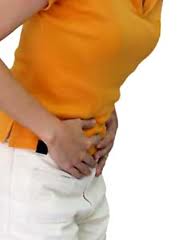
When you're plagued with this condition, finding out the causes of diarrhea becomes very important.
For most people, diarrhea (or diarrhoea as it's spelled in England) is of short duration, maybe just a day or two. For others, it's a habitual, chronic problem with seemingly no detectable cause.
For many of us, it strikes when we visit other parts of the world and it's then known as 'traveler's diarrhea'.
Diarrhea is not a disease in itself, but a symptom of some other underlying causes, most benign, some serious. It can exist alone or be accompanied by other symptoms as well.
If you want to know about diarrhea treatment and the best diet for diarrhea now click on the links, otherwise read on.
What are the Causes of Diarrhea?
Ordinarily, water is absorbed through the intestinal walls as food passes through the large intestine and fecal matter leaves the body as a solid mass. Two gallons/8 litres of water are reabsorbed every day from the colon and for this to occur, feces have to spend a certain amount of time there.
If something speeds up or otherwise interferes with this process, the fluids will be expelled from the body with fecal matter instead of being re-absorbed.
So one of the causes of diarrhea is when water is not re-absorbed in the intestine, resulting in frequent and loose, watery bowel movements.
But sometimes, other factors can cause the bowel to secrete more water. For example, bacteria such as E. coli and staphylococcus bring on diarrhea by stimulating water secretions, which explains why food- and water-borne infections commonly cause diarrhea. Some laxatives work the same way.
Apart from the loose stools, other symptoms that may accompany diarrhea include vomiting, cramping, thirst and abdominal pain. Some people may run a fever as well.
It's rarely a serious condition, except in infants, young children and the elderly, as dehydration can happen suddenly and be very dangerous.
Diarrhea causes the loss of both fluids and
electrolytes (minerals), which can make you feel disoriented and weak
and can affect your blood pressure, heart rate and muscle movement, so
it's essential to replace the lost fluids!
Many factors can cause a decrease in water absorption in the intestinal
tract, or an increase in water secretion, or a combination of both.
The causes of diarrhea can be many:
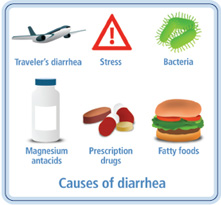
- The most common causes of diarrhea are gastrointestinal bacterial, viral, fungal and parasitic infections.
- Food poisoning or consumption of contaminated water can be the cause of these infections.
- Incomplete digestion of certain foods that end up fermenting in the intestines.
- Intolerance, allergies or sensitivities to certain foods or food compounds.
- Disease conditions such as inflammatory bowel diseases (IBD), irritable bowel syndrome (IBS) or celiac disease.
- Lactose intolerance.
- Laxative use and abuse.
- The use of certain drugs, including antibiotics such as tetracycline, clindamycin or ampicillin as they destroy the intestine's 'friendly' bacteria.
- Some supplements can cause diarrhea, including excess of vitamin C and magnesium.
- Antacids that contain magnesium salts can be one of the causes of diarrhea.
- Sorbitol, mannitol and xylitol are sugars found in dietetic foods that can cause diarrhea in people sensitive to them. Some people also react to fructose.
- Cancer and pancreatic disease.
- People with gallbladder problems often experience diarrhea after a fatty meal.
- Excessive alcohol consumption.
- Emotional stress also can be one of the causes of diarrhea.
Types of Diarrhea
Depending on the causes, diarrhea can be divided into four major types:
Osmotic diarrhea - when too much water is drawn into the bowels - can be the result of carbohydrate malabsorption (e.g. lactose intolerance); magnesium salts; and excessive vitamin C intake.
Secretory diarrhea - when there is an increase in the active secretion, or there is an inhibition of absorption - can be the result of toxin-producing bacteria; hormone-producing tumors; fat malabsorption (e.g. lack of bile output); laxative abuse; and surgical resection of small intestine.
Exudative diarrhea - with the presence of blood and pus in the stool - can be caused by inflammatory bowel disease (Chron's disease or ulcerative colitis); pseudo-membranous colitis (a post-antibiotic diarrhea caused by an overgrowth of the bacterium Clostridium difficile); and bacterial infection by other organisms.
Inadequate-contact diarrhea
is caused by inadequate contact between the intestinal walls and the
intestinal contents, leading to poor absorption and is the result of
surgical removal of sections of the intestine.
Most diarrhea is self-limiting. It's the body's way of getting rid of
something disagreeable - food, microbes or toxins. So for acute
diarrhea, just let it flow and keep drinking plenty of water and fluids.
SEE YOUR DOCTOR IF:
- You have severe abdominal or rectal pain.
- Fever of at least 102° Fahrenheit/38.8° Celsius.
- Blood in your stool.
- Signs of dehydration - sunken eyes, severe dry mouth, anxiety, restlessness, excessive thirst, little or no urination, severe weakness, dizziness or light-headedness and strong body odour.
- Your diarrhea lasts more than three days.
Be more cautious with small children, people already ill and the elderly.
Diarrhea Treatment
Most diarrhea lasts only a day or two, but when it continues beyond a few days, it's very important to find the causes of diarrhea and not just try to stop the symptoms with medications.
If you suffer with chronic diarrhea, you are not getting the maximum benefit from the foods you eat, no matter how good they are, because you are not absorbing all the nutrients and this can have long term effects on your health.
If you want to find out what foods trigger your symptoms, you might want to try an Elimination Diet specific for people who experience diarrhea (either related to IBS or to other conditions).
Unquestionably, diet can bring on, aggravate or alleviate diarrhea.
If you suffer with diarrhea you want to make sure that the foods you eat are not aggravating your symptoms. On the contrary, by eating the right stuff, you can shorten by 1/3 to 1/2 the recovery time from a bout of diarrhea and even preventing it from occurring altogether.
Choose one of the pages below to find out what the best foods for diarrhea are.
RELATED PAGES:
Diarrhea Treatment - deals with some of the myths and facts related to the treatment of diarrhea.
Diarrhea Diet - discusses the best diet that can help treat and prevent diarrhea.
IBS with Diarrhea - The Elimination Diet

References:
1) Balch, P., CNC, (2000) Prescription for Nutritional Healing: A Practical A-To-Z Reference to Drug-Free Remedies Using Vitamins, Minerals, Herbs & Food Supplements, New York: Avery.
2) Carper, J., (1993) Food Your Miracle Medicine: How Food Can Prevent and Treat Over 100 Symptoms and Problems, New York: HarperCollins Publishers Inc.
3) Duke, J.A., Ph.D.,(2008) The Green Pharmacy Guide to Healing Foods: Proven Natural Remedies to Treat and Prevent More Than 80 Common Health Concerns, New York; Rodale.
4) Lipski, E., Ph.D., CCN, (2005) Digestive Wellness, Fourth Edition: Strengthen the Immune System and Prevent Disease Through Healthy Digestion, New York: McGraw-Hill.
5) Murray, M., Pizzorno, J., (2005) The Encyclopaedia of Healing Foods London: Time Warner Inc.
Back to Foods' Healing Power Homepage from Causes of Diarrhea
Search for information on this site:
Receive Discover the Power of Healing Foods! Free
Newsletter
Products that can help during a bout of diarrhea
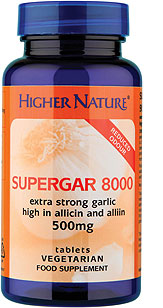
Extra Strong Garlic
Supplement
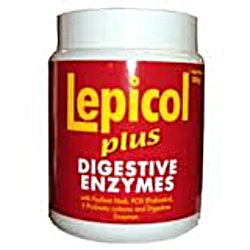
Lepicol with Digestive
Enzymes
New! Comments
Have your say about what you just read! Leave me a comment in the box below.