Health Benefits of Beans
and Their Healing
Power
Taking into account the numerous health benefits of beans, they should be known as "healthy people's meat" instead of "poor people's meat", as they're often called.
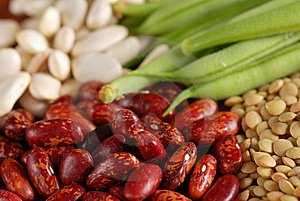
Beans (also known as legumes or pulses) belong to an extremely large category of vegetables, containing more than 13,000 species and are second only to grains in supplying calories and protein to the world's population.
Compared to grains, though, legumes supply about the same number of calories but usually two to four times as much proteins.
Despite their small size, beans pack a surprisingly rich and varied array of substances that are vital for good health.
Proteins in Beans
Some people don't enjoy the health benefits of beans as they should because they often consider them an 'incomplete' protein.
There are 20 different amino acids that form protein and 9 of them cannot be produced by our body (hence they're called essential amino acids), so we need to eat them in our food. These essential amino acids are: tryptophan, valine, methionine, threonine, phenylalanine, leucine, isoleucine, histidine and lysine.
Food
of animal origin (such as meat, fish, dairy products and eggs) contain
all 9 essential amino acids, whereas beans lack one or two of them,
typically methionine or tryptophan. Soybeans are the exception and
contain all nine essential amino acids.

Although it's important to get all the essential amino acids, it's not necessary to get them from meat. In fact, because of its high fat content - as well as the use of antibiotics and other chemicals in the raising of poultry and cattle - most of the animal protein should be eaten only in moderation.
Also, in order for the body to use the protein in food, it has to break it down into the individual amino acids and then use these to build the polypeptide chains necessary to make protein for your muscles, your immune system and all of the many components of your body that require protein. So it doesn't matter to your body where the protein comes from - whether it is of animal or vegetable origin - as long it has the building blocks it needs.
The
best way to go about it is to combine a variety of vegetable protein
foods in our diet. For instance, although beans and brown
rice are both rich in protein, each lack one or more of the necessary
amino acids. Some health practitioners suggest to combine them together
to form a complete
protein that is a high quality substitute for meat.
To make a complete protein they advise to combine beans with one of the following:
- brown rice
- corn
- nuts
- seeds
- wheat
But others believe that you can enjoy the health benefits of beans without having to combine them at each meal, as long as you eat other sources of protein during the same day or 24-hour period.
All soya products, such as tofu and soy milk, are complete proteins. They contain all the essential amino acids plus several other nutrients.
Health Benefits of Beans

Many legumes, especially soya beans, are demonstrating impressive health benefits. Diets rich in beans are being used to:
- reduce risk of many cancers
Also richly coloured dried beans offer a high degree of antioxidant protection. In fact, small red kidney beans rate even higher than blueberries.
A lesser-known benefit of beans, though, is their high levels of isoflavones, compounds that are similar in structure to estrogen produced by your body (which is why they are also called phytoestrogens).
These isoflavones may ease the symptoms of menopause, prevent some form of cancer, reduce your risk of heart disease and improve your bone and prostate health, among other benefits.
Beans, a Rich Source of Fibre

One of the reasons the health benefits of beans are so many is because they contain a lot of fibre (or fiber, according to the American spelling).
Depending on the type of legumes, they vary between 5 and 8.6 grams of fibre per 100 g (30 ounces) serving.
When you eat dried beans, they are not entirely digested, so the undigested material lies around in the colon, where bacteria attack it and start to feed on it.
In the process, lots of chemicals are released, which tell your liver to cut down its production of cholesterol and your blood to speed up clearing out dangerous LDL cholesterol. Plus, fibre can actually mop up cholesterol from the intestine and whisk it out of the system.
Also, chemicals that block formation of cancer cells are released. In fact, beans are concentrated carriers of protease inhibitors, enzymes that can counteract the activation of cancer-causing compounds in the colon.
Beans and Flatulence
Many people fail to enjoy the health benefits of beans because of the side effects experienced by some people.
As we've seen, the fact that beans are not completely digested brings its own health benefits, but it can cause flatulence (wind) or intestinal discomfort to some people.
This is caused by a type of fibre found in beans, called oligo-saccharides, which is composed of three to five sugar molecules linked together in such a way that the body cannot digest or absorb them.
So they pass into the intestines, where the bacteria break them down and gas is produced.
Haricot and lima beans are generally the most offensive, while peanuts are the least offensive because of their lower levels of oligo-saccharides.
The amount of oligo-saccharides in legumes can be significantly reduced by properly cooking, sprouting or soaking them for a few hours and rinsing them well before cooking; this, in turn will reduce flatulence, allowing you to enjoy the health benefits of beans without causing offence.
Some Serving Suggestions

How can you take advantage of the health benefits of beans?
The nice thing about beans is how easily you can add them to any meal.
- Pour them into soups and salads or use them in spicy Mexican dishes.
- You also can't go wrong with hummus, a mix of chickpeas, lemon juice, tahini paste and garlic, served with pitta bread or crackers, or as a dip for raw vegetable sticks.
- Or try substituting tofu for meat in some of your dishes.
I find very practical to keep a few tins of various types of beans and add them to any dish where I want to include some proteins and fibre, such as pasta dishes, casseroles, stews, salads and anywhere else I can think of.
Unfortunately most tinned beans have a lot of salt and sugar added, which I consider completely unnecessary. Make sure the ones you buy have no salt and sugar added. The organic ones are often very good.
There are so many different types of beans, all with unique properties and nutritional content, as well as
completely distinct taste and texture, so don't limit yourself to eating always the same ones. If you want
to know more about individual varieties, have a look at the list below or click on NEXT to go to the First
Part of Different Types of Beans.

Beans-related Articles
Different Types of Beans (Part 1) - Discussing Aduki beans, Alfalfa, Broad beans (Fava beans) and Carob. Also Carob vs Chocolate, Carob Fudge Recipe, Carob Mounds Recipe, Carob Cake recipe and Icing.
Different Types of Beans (Part 2) - Discussing Black beans, Haricot beans, Kidney beans, Lima beans (Butter beans), Dung beans, Pinto beans and Green beans.
Different Types of Beans (Part 3) - Discussing Chickpeas (Garbanzo beans), Lentils and Peas.
Beans and Heart Disease
Search for information on this site:
Receive Discover the Power of Healing Foods! Free
Newsletter
Articles in this Series:
Different Types of Beans
Part 1 - Aduki beans, Alfalfa, Broad beans (Fava beans), Carob
Part 2 - Black beans, Haricot beans, Kidney beans, Lima beans (Butter beans), Mung beans, Pinto beans, Green beans
Part 3 - Chickpeas, Lentil, Peas
Related Articles:
Most Popular
Pages:

The Best "Fish Oil" Supplement is Not Made from Fish

Bananas for High Blood
Pressure
Elimination Diet for IBS and Other Food
Sensitivities

Healing Foods for Heart
Disease
New! Comments
Have your say about what you just read! Leave me a comment in the box below.